Best collagen supplements on Amazon 2026 — what the science actually says
Collagen supplements are one of the most purchased beauty supplements on the market. The evidence for their efficacy is stronger than skeptics suggest and weaker than marketing claims imply. Here's what the research supports and which products on Amazon are worth buying.
Collagen supplements occupy an unusual position in beauty science. They are simultaneously dismissed by sceptics who argue that ingested proteins are broken down into amino acids and therefore cannot specifically benefit skin, and overclaimed by brands suggesting they rebuild collagen like a construction crew dispatched directly to your dermis. Both positions are wrong, and the actual evidence is more interesting than either.
This review covers what the clinical literature supports, what it doesn't, which product specifications matter, and which collagen supplements on Amazon are worth buying for skin-specific outcomes.
The actual mechanism — and why the sceptic argument is incomplete
The standard sceptical argument goes: collagen is a protein, proteins are digested into amino acids, the body distributes those amino acids where it sees fit, so taking collagen supplements is the same as eating any protein. This is partially correct and misses a significant body of evidence.
Hydrolyzed collagen peptides are not fully digested into individual amino acids. Specific dipeptides and tripeptides — particularly hydroxyproline-proline (Hyp-Pro) and hydroxyproline-glycine (Hyp-Gly) — survive digestion and are absorbed intact. These specific peptides accumulate in skin tissue and have been shown in controlled studies to stimulate fibroblasts to produce collagen and hyaluronic acid.
The mechanism is not simply "collagen in, collagen out." It is more accurately: specific collagen-derived peptides are absorbed and act as signalling molecules that upregulate the skin's own collagen synthesis machinery. This is a fundamentally different claim than "eating collagen becomes collagen," and it is better supported by the clinical evidence.
What the clinical evidence actually shows
The strongest evidence for oral collagen comes from randomised controlled trials measuring objective skin outcomes:
Skin hydration — the most consistently demonstrated benefit. Multiple RCTs, including a well-cited study published in the Journal of Cosmetic Dermatology, found that hydrolyzed collagen supplementation at 10g per day for 8–12 weeks produced measurable improvements in skin hydration compared to placebo. The mechanism is thought to involve both direct hyaluronic acid stimulation and the increased availability of glycine and proline for skin barrier maintenance.
Skin elasticity — demonstrated in several RCTs, with improvements typically seen at the 8–12 week mark. A double-blind, placebo-controlled study found significant improvement in skin elasticity with 2.5g of specific bioactive collagen peptides (VERISOL) daily over 8 weeks. The effect size was modest but statistically significant.
Dermal collagen density — more limited evidence but mechanistically plausible. Skin biopsy studies following collagen supplementation have shown increases in dermal collagen density and fibroblast density, supporting the fibroblast stimulation mechanism.
Fine lines and wrinkles — the evidence here is weaker and more variable. Some studies show modest reduction in periorbital fine lines; others show no significant effect. This is likely because fine lines reflect structural damage accumulated over years that short-term supplementation cannot meaningfully reverse.
The honest summary: collagen supplements have legitimate evidence for hydration and modest elasticity improvement. The fine line and anti-aging claims that dominate marketing are significantly ahead of the evidence.
What to look for in a collagen supplement
Hydrolyzed (peptide) form is essential. Non-hydrolyzed collagen is not meaningfully absorbed as intact peptides. Every product worth considering uses hydrolyzed collagen — look for "collagen peptides" or "hydrolyzed collagen" on the label.
Dose: 10g per day minimum for skin outcomes. The clinical literature for skin-specific outcomes consistently uses 10g per day or close to it. Products dosed at 2.5g are using the VERISOL peptide research, which showed effects at that dose for that specific peptide fraction — most collagen powders are not using VERISOL and should not cite that dosing.
Type I and III for skin. Type I collagen is the primary structural component of skin. Type III is co-distributed with Type I in dermis and supports skin structure. Products including Type II (from chicken cartilage or bone broth) are adding joint-focused collagen that has no demonstrated skin benefit at typical doses.
Marine vs bovine. Marine collagen (from fish skin) is predominantly Type I and has smaller peptide size — theoretically better absorption. The clinical evidence for skin outcomes does not clearly favour marine over bovine at this point, though marine is the appropriate choice for pescatarians.
Vitamin C inclusion. Vitamin C is a required cofactor for collagen synthesis — the hydroxylation of proline and lysine residues in the collagen triple helix requires ascorbic acid. Supplements including Vitamin C alongside collagen peptides provide the co-factor needed for the synthesis that the peptides stimulate.
Top picks
Best overall: Vital Proteins Collagen Peptides Advanced with Hyaluronic Acid and Vitamin C
The most complete formulation for skin-specific outcomes in the Vital Proteins range. 20g hydrolyzed bovine collagen peptides per serving — double the minimum clinical dose — plus 100% daily value Vitamin C and 120mg hyaluronic acid. The combination addresses three parallel pathways: collagen peptides stimulate fibroblasts, Vitamin C supports collagen synthesis, and hyaluronic acid provides direct hydration support.
Vital Proteins Collagen Peptides Advanced with Hyaluronic Acid and Vitamin C
$35–$45
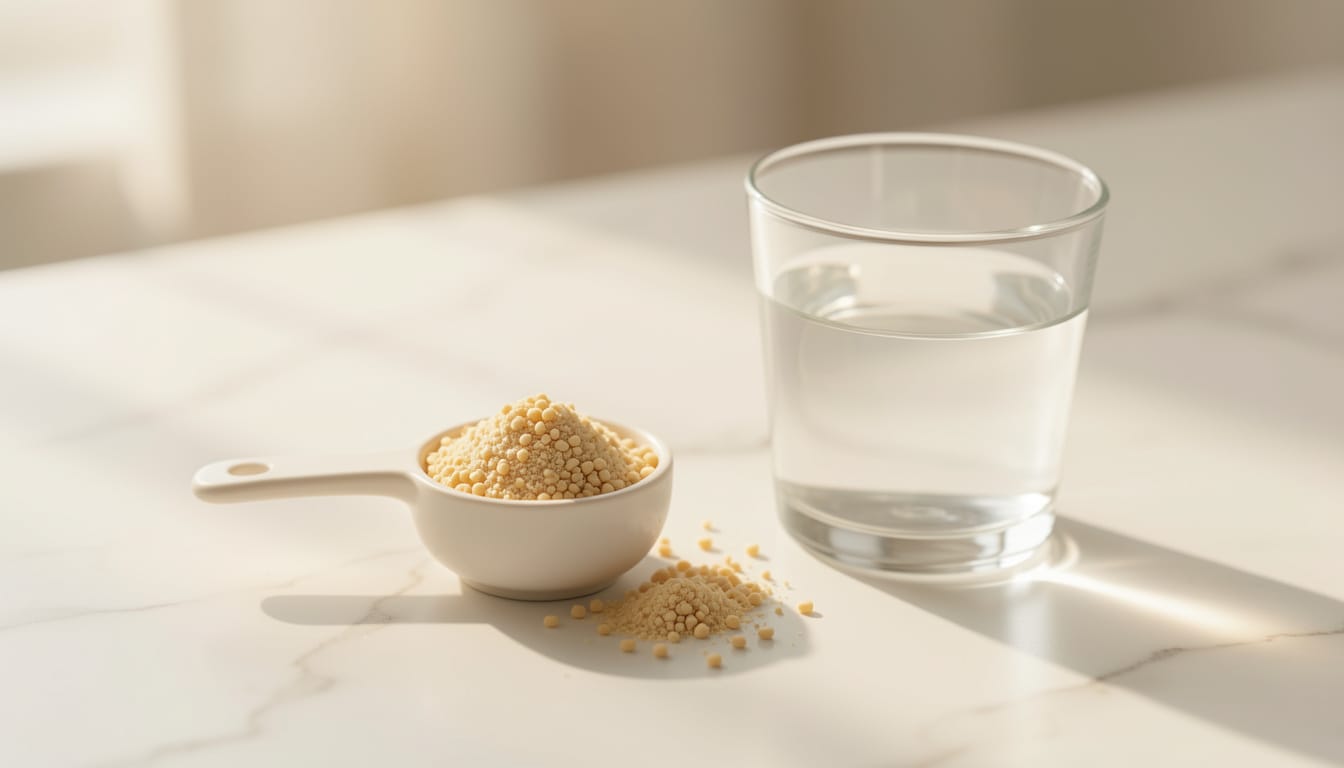
20g hydrolyzed Type I & III bovine collagen peptides, 100% DV Vitamin C, 120mg hyaluronic acid. Grass-fed, pasture-raised bovine. Unflavored — dissolves in hot or cold liquids. 27 servings per container. Paleo-friendly, dairy-free, gluten-free.
- ✓20g per serving — double the minimum clinical dose for skin outcomes
- ✓Vitamin C + hyaluronic acid address complementary pathways alongside the collagen peptides
- ✓Grass-fed, pasture-raised bovine sourcing — higher-quality amino acid profile
- ✓Unflavored and dissolves cleanly — practical for daily compliance
Best value: Sports Research Collagen Peptides Type I & III
11g hydrolyzed Type I and III collagen peptides per serving from grass-fed bovine. Third-party tested for heavy metals — a meaningful quality signal in the supplement category where testing is not standardised. Unflavored, dissolves easily, no additives. Does not include Vitamin C or hyaluronic acid, which is the primary trade-off versus the Vital Proteins Advanced — take with a Vitamin C supplement or your morning vitamin C serum routine.
Sports Research Collagen Peptides Type I & III
$22–$30
11g hydrolyzed bovine collagen peptides per serving. Grass-fed sourced. Third-party tested for heavy metals. Unflavored, no fillers or additives. Keto and paleo certified. 41 servings per container.
- ✓Third-party heavy metal testing — uncommon and meaningful at this price point
- ✓68,000 reviews — the largest validated review base in the category
- ✓Unflavored with no additives — purely hydrolyzed collagen, nothing else
- ✓Strong value per gram of collagen peptides delivered
What collagen supplements will not do
They will not reverse existing deep wrinkles. The structural changes in deep lines reflect years of accumulated collagen fragmentation and UV damage. Short-term supplementation provides amino acid substrate for new collagen synthesis but cannot reverse existing architectural changes in the dermis.
They will not replace topical actives. Collagen supplements and retinoids, peptide serums, and Vitamin C work through different mechanisms and are complementary rather than substitutes. A collagen supplement adds systemic substrate and signalling; topical actives work directly at the dermal level.
They will not produce results in two weeks. The RCTs showing skin benefits used 8–12 week intervention periods. Marketing claims suggesting visible results in two weeks are not supported by the evidence at typical doses and in typical subjects.
How to take collagen supplements for skin outcomes
Daily consistency matters more than timing. There is no strong evidence for a specific window that maximises skin benefits. Morning use with coffee or a smoothie is the most common approach because compliance is higher when attached to an existing habit.
Pair with Vitamin C. If your supplement does not include Vitamin C, take it alongside a glass of orange juice, a Vitamin C supplement, or after applying your morning Vitamin C serum — all of which supply the cofactor for collagen synthesis.
Allow 8–12 weeks before assessing. The hydration improvements are typically noticeable earlier (4–6 weeks); elasticity changes require longer. Taking before photos at baseline is the most reliable way to evaluate whether the supplement is producing visible changes for your skin.
Dose to the clinical evidence. At 11–20g per day, the evidence is reasonably strong. At 5g per day or less with a non-VERISOL peptide fraction, you are outside the range where the clinical literature reliably shows skin benefit.