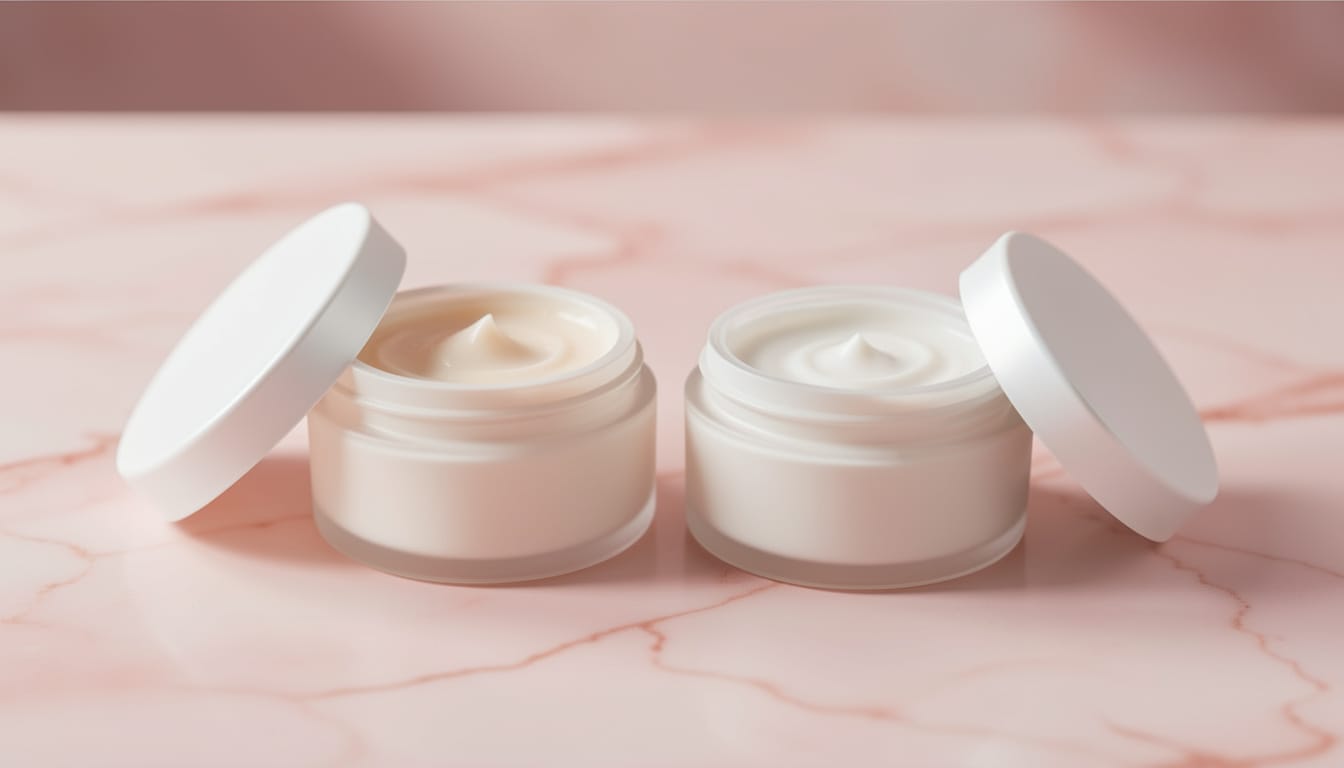
Best luxury moisturisers under $150 on Amazon — actually reviewed
The moisturiser is the one skincare product most people use twice daily for years. Getting this step right matters more than optimising any serum. Here are the luxury options under $150 that hold up to scrutiny.
The moisturiser is arguably where most skincare budgets should concentrate before anywhere else. It is applied twice daily, it sits on skin for hours, and it determines whether your serums can do their job. And yet most buying guides treat it as an afterthought compared to active serums and treatments.
This review focuses on Amazon-available luxury moisturisers under $150. The $150 ceiling is deliberate — it eliminates La Mer and its peers, where the evidence-to-cost ratio becomes very difficult to defend, and keeps the focus on products where genuine formulation quality exists alongside a price that is high but not irrational.
Three criteria guided selection: hydration effectiveness (does the skin barrier function improve?), formulation intelligence (are the actives at therapeutic concentrations?), and texture elegance (because a moisturiser you will not use consistently is not a good moisturiser regardless of its ingredient list).
What a moisturiser is actually doing
Before the picks, a brief framing on mechanism — because understanding what a moisturiser does clarifies what to look for.
A moisturiser works through three mechanisms simultaneously:
Humectants draw water from the environment and the deeper dermis toward the stratum corneum. Hyaluronic acid, glycerin, and sodium PCA are the primary humectants. They increase water content in the skin surface.
Emollients fill the spaces between skin cells in the stratum corneum, reducing water loss through the skin surface. Squalane, fatty acids, and many plant oils function as emollients. They improve skin texture and softness.
Occlusives form a physical barrier on the skin surface that slows transepidermal water loss. Petrolatum is the most effective occlusive; silicones, beeswax, and shea butter are lighter alternatives. They seal in what the humectants and emollients have delivered.
The best moisturisers use all three in a ratio appropriate for the skin type they are targeting. A moisturiser for oily skin emphasises humectants with minimal occlusion. A moisturiser for dry skin uses heavier emollients and occlusives alongside humectants. Understanding this helps you evaluate whether a product's ingredient list matches its marketing claims.
What to look for in the ingredient list
Humectants high on the list: water, glycerin, hyaluronic acid (or sodium hyaluronate), and panthenol should appear near the top of the ingredient list — typically within the first five to eight ingredients. Their presence near the bottom indicates token amounts.
Ceramides for barrier repair: ceramides are the lipid molecules that make up 50% of the stratum corneum's composition. Moisturisers including ceramides (NP, AP, EOP, or listed as ceramide-3, ceramide-6-II) support the barrier's structural integrity rather than just adding surface hydration.
Peptides for skin structure: at meaningful concentrations (appearing before preservatives in the ingredient list), peptides signal fibroblasts and provide collagen-supporting activity beyond basic hydration. Palmitoyl pentapeptide-4 (Matrixyl), palmitoyl tripeptide-1, and the oligopeptide family have the most clinical support.
Fragrance and essential oils: a significant proportion of skincare contact dermatitis is caused by fragrance ingredients, including natural essential oils. For a product used twice daily, fragrance-free is the appropriate default for most skin types — particularly combination, sensitive, or reactive skin.
Top picks by skin type
Best for normal to oily skin: Tatcha The Water Cream
Tatcha's Water Cream is the most consistently recommended luxury moisturiser in its texture category — lightweight, oil-free, and bursting on application to release hydrating actives. The formulation centres on Hadasei-3, a proprietary fermentation complex of green tea, rice, and algae — three ingredients with strong antioxidant and skin-calming evidence. Wild rose provides astringent and pore-minimising activity without harsh acids.
The texture is where this product distinguishes itself. It is genuinely light — not a "light for a cream" light, but actually lightweight — which means it works under SPF and makeup without pilling and is comfortable year-round for oily or combination skin types that find conventional creams occlusive.
Tatcha The Water Cream
$68–$75
Oil-free water-burst cream for normal to oily skin. Hadasei-3 fermentation complex (green tea, rice, algae). Japanese wild rose for pore refinement. Lightweight, non-comedogenic texture that absorbs without residue. 50ml. Fragrance-free. Cruelty-free.
- ✓Oil-free texture genuinely suitable for oily skin — not just marketed as such
- ✓Hadasei-3 fermentation complex provides antioxidant and skin-calming activity
- ✓Works under makeup without pilling — a practical advantage for daily use
- ✓Fragrance-free — reduces sensitisation risk with twice-daily use
Skin type specificity: this product is genuinely not appropriate for dry skin. The lightweight texture does not provide sufficient occlusion to prevent transepidermal water loss in a dry skin barrier. Dry skin types will feel it is insufficient within two to three hours of application. For that audience, see the Dewy Skin Cream below.
Best for dry and combination-dry skin: Tatcha The Dewy Skin Cream
The richer sibling of the Water Cream, the Dewy Skin Cream targets dry to combination skin with a plumper, more occlusive formulation. The same Hadasei-3 fermentation complex provides the base antioxidant activity, with the addition of hyaluronic acid and Japanese purple rice — an ingredient with high anthocyanin content and established antioxidant activity in skin research.
The name accurately describes the finish: this cream produces the "glass skin" luminosity that reads as healthy hydration rather than surface shine. For dry skin in particular, the visual result of a well-chosen moisturiser is one of the fastest-visible improvements in a skincare routine — and this product delivers it within days.
Tatcha The Dewy Skin Cream
$68–$75
Rich hydrating cream for dry to combination skin. Hadasei-3 fermentation complex, hyaluronic acid, Japanese purple rice anthocyanins. Produces a dewy, luminous finish. 50ml. Fragrance-free. Suitable for pregnant women — no retinoids or salicylic acid.
- ✓Genuine hydration for dry skin — not superficially moisturising with heavy texture
- ✓Hyaluronic acid at a meaningful position in the ingredient list
- ✓Fragrance-free despite the rich formula — unusual at this price point
- ✓Safe during pregnancy — no actives with contraindications
The honest alternative: Olay Regenerist Whip Fragrance-Free
This entry requires an explanation. The Olay Regenerist Whip costs $26–$32. Its inclusion in a luxury moisturiser review is deliberate.
The formulation contains Amino-Peptide Complex II (a combination of niacinamide, palmitoyl pentapeptide-4, and palmitoyl dipeptide-7 at concentrations comparable to many products at three to four times the price), hyaluronic acid, and vitamin B5 in a silicone-free, fragrance-free base with SPF 25 in the sunscreen version.
Multiple independent dermatologist assessments have ranked the Regenerist Whip as comparable in outcomes to luxury moisturisers at $80–$120. It is not as cosmetically elegant as Tatcha — the texture is functional rather than luxurious — but it delivers the active ingredients that produce the skin improvements most people are seeking from a premium moisturiser.
Including it here is not a concession — it is the most useful thing a science-first skincare review can do: tell you when the evidence does not support the premium.
Olay Regenerist Whip Fragrance-Free
$26–$32
Amino-Peptide Complex II (niacinamide + palmitoyl pentapeptide-4 + palmitoyl dipeptide-7), hyaluronic acid, vitamin B5. Whipped lightweight texture that absorbs fully. Fragrance-free, paraben-free, silicone-free. Available with or without SPF 25.
- ✓Palmitoyl peptides at named concentrations — the same actives in $120 luxury alternatives
- ✓Fragrance-free — appropriate for the twice-daily application frequency
- ✓Available with SPF 25 — combines moisturiser and sun protection in one step
- ✓41,000 reviews provide one of the most validated real-world data sets in this category
How to match moisturiser to skin type
Oily skin: the Water Cream or Olay Whip. Lightweight humectant-forward formulas without occlusive oils. Avoid any moisturiser with shea butter, plant oils, or high-silicone formulations as primary ingredients.
Combination skin: the Water Cream in summer and warmer climates; the Dewy Skin Cream in winter or dry environments. Your T-zone and cheeks may need different approaches in different seasons.
Dry skin: the Dewy Skin Cream. More occlusives, richer emollient base, designed for a skin barrier that loses moisture faster than average.
Sensitive or reactive skin: all three picks are fragrance-free, which is the most important specification for reactive skin. Start with the Olay Whip — its simpler formulation reduces the number of potential sensitisers.
Mature skin: the Dewy Skin Cream for the luminosity and hydration benefits; the Olay Whip as a value-conscious choice where the peptide concentration is comparable to alternatives at much higher prices.
Where moisturiser fits in a routine
Moisturiser goes on after serums and before SPF in the morning, and after serums as the final step at night. The logic: serums are typically water-based with small molecular weights and need direct skin contact for maximum absorption; the moisturiser's emollient base seals them in rather than competing with them.
For retinoid users: apply retinoid first, let it absorb for 15–20 minutes, then apply moisturiser. The moisturiser should not dilute the retinoid — it should support the barrier function that retinoids stress during the adaptation period.
For vitamin C users in the morning: vitamin C before moisturiser. The low-pH environment of an LAA serum needs to be established before the more pH-neutral moisturiser is applied. Wait two to three minutes if possible.
The moisturiser is where consistency pays dividends. A serum skipped one evening is recoverable; a moisture barrier consistently compromised by an inappropriate moisturiser affects every other product in your routine.